Garden Center Links


Weed Control for Lawn and Garden
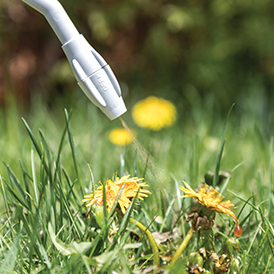
A weed, commonly defined, is a plant that is growing in the wrong place. In the vegetable garden, weeds can compete with garden plants by sucking up all the water and nutrients in the soil and blocking the light they need. In the lawn, too many weeds lower property values and result in unattractive, uneven grass growth. Luckily, there are several methods to keep weeds in check, both chemical and natural.
The Lawn
The most effective way to manage weeds in your lawn is to start with a good foundation. By choosing vigorous grass varieties, you promote strong turf growth, which starves weeds of light and nutrients. Choose the proper mix of seed for both the sunny and shady areas of your site. Fertilize the entire lawn properly (following instructions and timetables on packaging) to keep grass healthy. When mowing, keep the blade sharp, and keep grass height between 2 1/2 - 3 inches. Lower grass levels let in sun and encourage weeds to flourish.
Herbicides may be used to control many lawn weeds. Crabgrass can be prevented by application of a pre-emergent herbicide to the lawn in the spring. Pre-emergents act by killing weeds before they crop up, so using it at the right time of the year is critical. If it's a little later in the spring or summer, try a multi-purpose herbicide that kills both crabgrass and common broadleaf weeds. Several control a wide variety of weeds, and won't harm your turf. When using any herbicide, be sure to follow label directions carefully and follow precautionary warnings regarding children and pets. A non-selective herbicide, such as Roundup, will kill every growing thing with which it makes contact, including flowers and ornamental plants. It is a useful tool when you want to kill weeds and grass in a flower bed or larger area, so you can start over with new plantings. A natural way to kill a large area of weeds is to practice solarization. After watering thoroughly, cover the area to be treated with 2 layers of heavy, clear plastic sheeting. Weight plastic down to prevent it from blowing away, and leave in place for several weeks. Sweep away rain if it pools on top. In 4-6 weeks, the weeds, seeds and their roots will be killed.
Dandelions and other broadleaf weeds can be hand-pulled as soon as they show up in your lawn. A little weed-pulling time each day will keep smaller weed outbreaks under control, and provide you with a little fresh air and exercise.
The Vegetable Garden
Mulching is the first line of defense for keeping weeds under control. A thick layer of natural, pesticide- and weed-free mulch (straw, wood chips, grass clippings, etc) will block sunlight and keep the weeds from taking hold. Wait until the soil warms up before using organic mulches to assure better plant growth. An organic paper weed barrier will last all season, and gradually decompose into the garden. Weeds that get the opportunity to go to seed are much harder to control, so be persistent in finding and removing them early. Persistent weed patches can be killed by smothering them with layers of newspaper or cardboard, then covering with a layer of mulch. The paper will eventually decompose while adding nutrients to the soil. Deprived of light, the weeds won't grow.
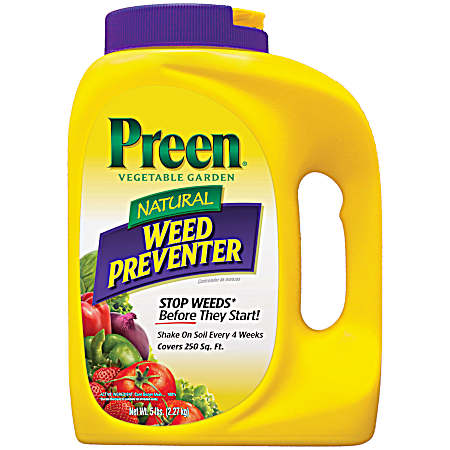
The use of herbicides is not recommended when growing food crops. A weed preventer, such as Preen, may be used to prevent new weeds from forming, but it will not kill existing weeds.
Use a hoe to remove easy-to-access weeds between garden rows. Weekly hoeing dries out the top layer of the soil and prevents the weeds from obtaining a foothold. Be careful not to damage the roots of your vegetables. Removal of weeds by hand is easiest in the morning, or after a light rain when the soil is moist. Take care to get all the crowns and roots out as you pull. Be sure to pay attention to the perimeter of the garden, as weeds often grow around the edges unnoticed and go to seed. Most compost piles generate enough heat to kill weeds and their seeds, so consider tossing them into the heap.
The Flower Garden
A fabric weed barrier will keep weeds out of your flower beds and around ornamental shrubs, while helping to control moisture. In perennial gardens, you can spot-kill aggressive weeds with Roundup, if you carefully avoid contact with other flowers. You'll have to wait a few days before you can add plants to the treated area. Always follow label directions. Mulching with cocoa bean shells, shredded bark and leaf mulch will prevent weeds from returning after pulling.
The Patio
Annoying weeds that grow between cracks in the patio or driveway are hard to dig out, but can be effectively killed with Roundup or Bayer Durazone. If you are looking for a quick weed killer, regular round up only stays in the system for a day or two. If you are looking for a longer-term killer Roundup Extended Control will last up to 4 months, Bayer Durazone will last up to 6 months, and Roundup 365 will last up to 1 year!
An all-natural weed-killer can be made in your kitchen. Boil a solution of 1 cup table salt and 2 cups of water. Pour the hot liquid carefully, directly onto weeds. This mixture will also kill grass and other plants, so is best used only on concrete or paved surfaces.