Garden Center Links


Lawn Repair Projects

Even with regular feedings and proper maintenance, your lawn may occasionally need to be repaired. Extreme heat, periods of drought, insects, disease, and normal wear and tear can make lawns look worn and tired. There are 2 seeding projects ideal for repairing your lawn: patching and overseeding.
Bare Spot Repair: Patching
Bare spots in your lawn are a common problem, but fortunately, they are easy to fix. Repairing bare spots not only makes your lawn lush and more enjoyable, it also helps prevent bigger problems, like weed invasions, from happening later. To repair bare spots in your lawn, follow these steps.
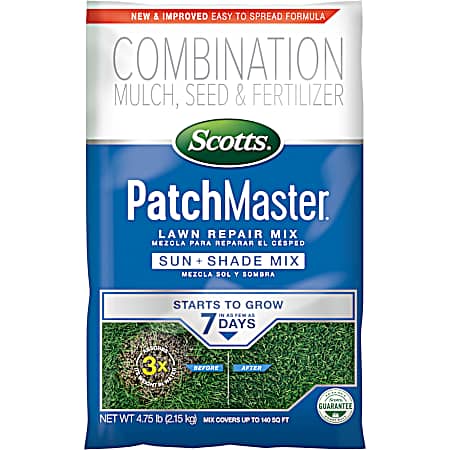
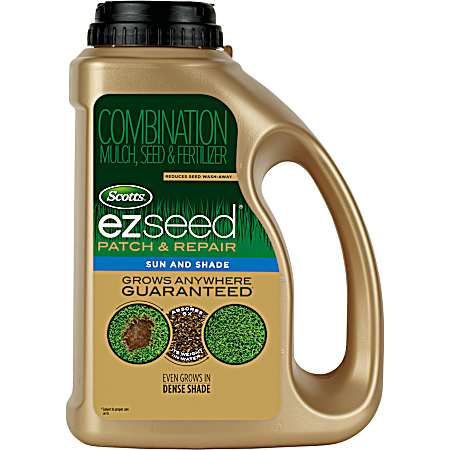
- Choose a patching product. Scotts® EZ Seed® Patch & Repair is specially designed for patching bare spots in the lawn. It’s an all-in-one product containing Scotts® high-performance grass seed, premium continuous-release lawn food, and a super-absorbent growing material that helps keep the seed from drying out. And the best part is it's easy to use, and the results are guaranteed! (Subject to proper care.)
- Prep the area. Before applying Scotts® EZ Seed®, simply rake the ground to remove any debris (like dead grass and weeds) and loosen the soil to help the tiny seedlings take root once they sprout.
- Apply the product. Scotts® EZ Seed® should be applied so that the bare spot is mostly covered but the ground beneath is still visible. When watered, the mulch in the product will expand to fill the entire area and help keep the seed covered and moist.
- Water well. Thoroughly water the newly seeded area until no more water is absorbed. When Scotts® EZ Seed® turns light brown, it’s time to water again. Continue to water daily (or as needed) for at least 2 weeks or until the seedlings are 2 inches tall.
Thin Lawn Repair: Overseeding
With each passing year, the wear and tear on your lawn can cause it to become thin and weak even with regular feedings. Thin, weak grass is also a welcome invitation for weeds to move in and make your lawn their home. Overseeding, or thin lawn repair, is a quick, inexpensive way to help return worn-out, tired grass to its former lush, green glory. If you want a thicker, greener lawn, follow these steps.
- Choose an overseeding product. If your lawn contains cool-season grasses (Kentucky bluegrass, fine fescue, perennial ryegrass, or tall fescue), choose Scotts® Turf Builder® Thick'R Lawn™, a 3-in-1 solution uniquely formulated to help turn weak, thin grass into a thicker, greener lawn with stronger roots in a single application. This product combines Scotts® high performance grass seed with fertilizer and a soil improver to create an easy-to-use product. However, if you live in the South and your lawn contains a warm-season grass type (bermuda, zoysia, centipede, or bahia), choose a Scotts® Turf Builder® Grass Seed that matches your current lawn.
- Mow low. Set your mower to one of its lowest settings and cut your grass so that it’s no more than 2 inches tall. Be sure to bag the clippings as you mow – it will make the next step easier.
- Prep the area. After mowing, rake the lawn to remove any remaining dead grass and debris and loosen the top layer of soil. This will help the grass seedlings take root once they sprout.
- Apply the product. This is the easy part. Simply fill up your spreader with Scotts® Turf Builder® Thick'R Lawn™ or Scotts® Turf Builder® Grass Seed, adjust the spreader settings according to the label directions, and apply.
- Water regularly. Keep the soil surface moist by watering daily or as needed for the first 2 weeks. Resume mowing when the lawn reaches the desired mowing height.
See all the Scotts lawn products from Fleet Farm.