Garden Center Links


Growing Herbs in Winter

Adding Freshly-Picked Herbs to Your Cold-Weather Meals
Winter is here. There is six inches of snow on the garden. Wouldn’t it be wonderful to walk a few feet (in your robe and slippers) and snip off some fresh herbs—from inside your house? Getting herbs to grow indoors can be a challenge, but the results can be rewarding—and delicious!
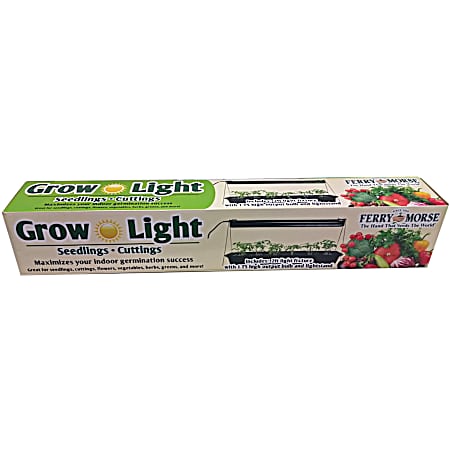
In order to grow best out of doors, most herbs require at least 6 hours of direct sunlight. Indoors, you need to supply your plants with the brightest light available. Fluorescent grow lights will give you the best chance for successful growth. You will need to provide twelve hours of artificial light each day to maintain a lush, healthy supply of fresh herbs. Lettuce may be able to tolerate the lower light of a windowsill without a grow light. Choose your home’s brightest window (south-facing is best) and experiment with different varieties of lettuce and leafy greens.The Ferry-Morse lighting system supplies 20% more light intensity than a regular fluorescent grow light, and its 2-foot length can illuminate several pots at once. Find a spot in the house where you can leave your grow light on for 12 hours without interruption. The area should maintain a steady temperature between 65-70ºF. A programmable timer works well to keep the light on and off as needed.
Select the seeds you wish to grow from the garden center. Popular herbs for home chefs include parsley (flat leaf and curly), basil, rosemary, chives, cilantro and oregano. Most seeds need darkness to germinate, so you will not need to use the light until the seedlings begin to emerge. Some seeds do need light to germinate (chervil, dill, lemon balm, winter savory) and should be planted by pressing lightly into the soil. Choose small pots with drainage holes, but be sure to put trays underneath to catch excess water. A long narrow window-box type planter will work well underneath the lighting device, as will individual pots on a tray. Put a piece of coffee filter or paper towel over the drainage hole to prevent the soil from escaping, then fill your pots with a good quality sterile potting or seed-starting mix. Plant herb seeds according to package instructions and mist well to moisten the soil. Be sure to label your pots to help you identify the herbs in their younger stage of growth. As the seedlings emerge, thin them out as needed, and keep soil from drying out completely, but try to avoid over-watering.
Perhaps your household enjoys herbs, but is too busy to tend to the plants on a regular basis. There is a fast and easy way to get a continuous supply of herbs, right from your kitchen counter! Miracle-Gro has developed a self-contained system that uses water, not soil, to grow herbs anywhere you want. With the Aerogarden system, your plants will grow five times faster than they do in soil. You never have to worry about spilled dirt, pests or mess. The Aerogarden herb seeds are pre-measured and put into pods, ready to insert into your growing system. Simply put in the pod, add water and liquid nutrients (included), and plug the garden in. In 4-6 weeks you’ll be able to harvest herbs such as fresh basil, parsley and dill, and keep enjoying them for 6 months or more! Full-spectrum light is provided by LED and costs just pennies a day to operate. Fleet Farm carries a 3-plant and a deluxe 7-plant version of the Aerogarden system, along with extra herb and seed pods to keep the goodness growing. This is truly an inspired gift for the chef or natural food lover in your life.
Include a jar of homemade pesto and this recipe with your gift to make it even more special. Enjoy!
Basic Pesto*
Combine 1 cup of fresh basil leaves, 3 tablespoons of pine nuts or walnuts, 3 tablespoons of grated Parmesan cheese and 2-3 cloves of garlic. Puree in a food processor or blender, slowly adding olive oil until a smooth paste forms.
*Recipe is from Rodale’s Illustrated Encyclopedia of Herbs. Rodale Press, copyright 1987.